Monday, October 15, 2007

Pensionado / Rentista Visas #2

This is the official list of requirements, as posted in http://www.migracion.gob.pa/eng/service_popup.php?id=52 on October 15, 2007:


Indefinite Residence Permit in capacity as Pensioned Tourist


To grant an indefinite residence permit in capacity as Pensioned Tourist.

Who may request this Permanent Residence Permit?

A person retired from a foreign government or private company earning a permanent minimum income of Five Hundred American Dollars ($500.00) or its equivalent. If the person coming with dependents, an additional One Hundred (U$100.00) monthly is obligatory per each dependant. The law grants, in addition to the indefinite residence permit, tax franchises to import households or personal items once, up to the total amount of $10,000.00 (Ten Thousand Dollars), and an automobile for personal use every two years.

Note:

  • All foreign citizens, that approach the National Directorate of Immigration and Naturalization to perform any procedure, must be previously registered in the Migratory Movement Section, presenting the following requirements:
    1. Two (2) carnet size photos
    2. Copy of the pages of the passport that contain the general information about the petitioner and the page that shows the stamp of the last entry to our country.
    3. Pay fee for registration.
    4. Complete the registration form of the Sworn Statement.

  • In the case that the request includes dependents, the requirements for the Immigrant Visa as a Resident’s Dependent must be included.
  • All documents issued abroad, must be properly annotated or authenticated by the Republic of Panama Embassy or Consulate at the country that issued them and by the Ministry of Foreign Affairs of Panama.
  • All documents issued abroad that are not written in the Spanish Language, must be translated by an Official Public Translator recognized by the Ministry of Government and Justice or Ministry of Education.
  • All foreign residents, temporary visitors or with an application being processed, that wishes to go abroad and re-enter the country, requires from the National Directorate of Immigration and Naturalization a MULTIPLE VISA BEFORE LEAVING THE COUNTRY. The omission of this procedure will incur a One Hundred Balboa fine (B/100.00).
  • Countries that require a Consulted Visa, have to present with the petition a Certification that authorizes them to apply for a temporary residence visa, issued by the Department of Consulted Visas of the National Directorate of Immigration and Naturalization.
  • The Sworn Declaration is a form supplied by the National Directorate of Immigration and Naturalization. This must be signed by the interested party and be completed in full. Providing false information may lead to penal and legal responsibilities and the negation of the requested visa or the annulment, if already granted. The foreigners who are under age don’t have to fill out the form, but their parents or tutor must give the requested information, although not under the gravity of oath.

The documentation must be presented COMPLETE and in the following order. Small documents such as, birth certificates, health certificates, receipts, etc., must be added to a legal size paper and both faces of the abovementioned documents must be clearly seen, in order to be properly received.

REQUIREMENTS:

Foreigners:

At the presentation of the documents, a three months temporary carnet is issued and at the time of the approval of the request an indefinite residence carnet is issued. The costs of the carnets will be paid by the interest party.

Power of attorney and request by means of a lawyer: The Power of Attorney must be presented before a Public Notary or personally before the Directorate of Migration and Naturalization by the visa applicant ( if it is only one person) or by all the over age components of the family group (head of family and dependents). This must show the complete general information of the interested parties, including full name and parent’s nationality. In addition, it must specify all the general information of the lawyer of the applicant and dependents, including office’s address, domicile at the Republic of Panama, telephone numbers and e mail. Also the complete information of attached checks must be given (check number, drawing bank’s name, date and amount). List and identify the attached documents, as well as expressing the legal grounds in which you base the petition

Health Medical Certificate […issued within the three (3) months prior to the presentation date (it must have the date, signature and seal with the doctor name, including the code and register number of the physician)].

Penal and police record issued by the previous country of residence of the petitioner within the last two years, (This document will not be necessary, if the interested party has resided in Panama for the last two or more years on a consecutive time.

Passport issued by country of origin [...with a minimum of six months validity time and a complete photocopy of the passport, duly authenticated before a Public Notary].

Two (2) Carnet size photos [...up dated, of every interested party, (no hats or veils and facing front]

Document that certifies, by foreign government, international entities or private companies, the retired condition of the petitioner, and that the interested party earns a permanent income no less than Five Hundred American dollars or its equivalent ($500.00) per month. If there are dependents, the additional income has to be One Hundred Dollar ($100.00) monthly, per dependant. ( If the certification is in a foreign currency, a certification from the Panama National Bank stating the equivalent amount in dollars.)

If petitioner is retired from a private company, He (She) has to present the document that certifies by means of the authorized authority that the company is still operating (equivalent to the Panamanian Public Register Certificate) and attach the last five supporting documents of the pension receipt. If the money is received by bank’s transfer, copy of the bank statement from the bank, have to be presented.

Personal Background Sworn Declaration [… duly signed by the interested party and by an authorized official of the National Directorate of Immigration and Naturalization or whoever receives the petition. (Form supplied by the National Directorate of Immigration and Naturalization).]

An extra set of photocopies of all the documentation presented.

Legal Base:

Law No. 9 of June 24 of 1987 and the Executive Decree No. 62 of August 4 of 1987

Observations:

No observations registered

Opening hours to the public:

Monday through Friday: from 7:30 a.m. to 1:30 p.m.

Address:

29th Street and Cuba Avenue

Phone Number: (507) 507-1800


Copyright © 2007. National Directorate of Immigration and Naturalization. All rights reserved.


For rentistas wanting the 2nd passport, the requirements vary as follows:


Temporary Residence Visa as an Independent Retired


To grant a Temporary Residence Visa as an Independent Retired.

Who may request a Temporary Residence Visa with an Independent Retired Status?

All those foreigners that earn a minimum monthly income of Seven Hundred Fifty (US$750.00), that proceed exclusively from the interest of a five year period time deposit at “Banco Nacional de Panama” (National Bank of Panama). The petitioner can bring his (her) dependents into the country (Are considered as such, the parents, spouse or children under legal age or those who are of legal age but under 25 years, single and without children that are attending regular studies, on a Study Centre duly recognized by the Ministry of Education. The permit is granted for five extendable years and a special Panamanian passport is issued for the same length of time. The retired petitioner can invest money at the Panamanian Territory, previous to the compliance of the requirements, but will not be able to work within the territory.


Certification from “Banco Nacional de Panama” (National Bank of Panama) confirming that petitioner earns an income of Seven Hundred and Fifty dollars (B/.750.00) in monthly interest, that proceed exclusively from a five year period Time Deposit, mortgage free or that is not used as a collateral.

Photocopy of the Time Deposit certificate or contract duly authenticated by “Banco Nacional de Panamá” (National Bank of Panamá).


When filing along with a spouse or a child, more paperwork must be filed. A certificate of birth for the child, and/or certificate of marriage for the spouse, as required for the Immigrant Visa as a Resident’s Dependent.

.

Immigrant's Visa and Residence Permit as Resident's Relative Dependent Status

When filing along with a spouse or a child, more paperwork must be filed. After registering under the Filiación procedure, a certificate of birth for the child, and/or certificate of marriage for the spouse, must be submitted as required for the Immigrant Visa as a Resident’s Dependent http://www.migracion.gob.pa/eng/service_popup.php?id=4:

Immigrant's Visa and Residence Permit as Resident's Relative Dependent Status

To grant Immigrant’s Visa and Residence Permit as Resident’s Relative Dependent Status.

Who may apply to this visa and its correspondent residence permit?

The only persons that may apply to this visa are the ones that comply with the relationship degree established by Article 2 of Executive Decree 52 of February 19 of 2003 which are:

a. Parents of the principal petitioner.

b. Spouse

c. Single children under 18 years of age.

Only by exception, the National Director of Immigration and Naturalization may authorize the inclusion as a resident’s relative dependent, children under 25 years of age, single, without children, according to the established policies of the Family Code. Students must comply with the regulation of attending studies in a regular basis in an Educational Centre recognized at the Ministry of Education. Additionally, it must be taken in account that the resident’s dependent is not authorized to work in the country and the violation of this prohibition will cause the cancellation of the Resident permit.


Letter in which the Resident accepts responsibility for the relative claimed as dependent, and assume all the obligations of providing the petitioner with food, house, health, education (if this is the case) and other general expenses, including the commitment of assuming the repatriation expenses, if it is necessary. This letter must include the telephone numbers, home address and place of work where the responsible resident can be located.

Relationship’s evidence [.Marriage certificate or Birth Certificate, according to the case]

Resident’s economic evidence of solvency: [.The resident can prove the mentioned solvency in the following manners: a) An updated and authenticated Tax Income Form issued by the Internal Revenue Service including the payment receipt. The Resident must have a minimum monthly gross income of Five Hundred “Balboas” plus an additional Seventy Five “Balboas” (B/. 75.00) per each dependent. b) Updated work certification letter and the Social Security payment stubs, showing the minimum monthly gross income of Five Hundred “Balboas” plus the additional Seventy Five “Balboas” per each dependent c) Updated Bank reference letter, only if a less than one year time deposit is presented, and the interest earned on such time deposit is for a minimum monthly income of Five Hundred “Balboas” (B/. 500.00) plus the additional Seventy Five “Balboas” (B/. 75.00) per each dependent.

Photocopy of the one year carnet or photocopy of the personal identity card of the responsible resident authenticated by the Civil Registry.

A Petitioner of legal age and under twenty five (25) years old [. . . must provide: a. Study certifications of approved institutions by the Ministry of Education that confirm the regular university student’s condition. The certification must supply the Ministry of Education resolution that approved the above mentioned educational centre (except if there is the University of Panama or the Technological University of Panama. b) Provide proof of the civil status (Single’s certificate). C) Penal and Police record for the last two years, from the country of origin.

Legal Base:

Law-Decree 16 of 1960 and its amendments. Executive Decree 52 of February 19 of 2003.

Registration of Foreign Residents before a Visa Application

Whenever a foreigner applies for an extension of his tourist visa, or changes his tourist visa to an immigrant or another resident status, he must appear before the "Movimiento Migratorio" Section of the Immigration office in order to have a print of his/her thumb registered and provide personal information - a process called in Spanish "Filiación".
In addition, all foreign documents provided must comply with these requirements.

  • All foreign citizens, that approach the Directorate of Immigration to perform any procedure, must be previously registered in the Migratory Movement’s Section, whereto has to fulfil the following requirements:
  1. Present two (2) carnet size photos
  2. Present a copy of the page of the passport that containing the general information about him or (her) and copy of the page that shows the seal of the last entry to our country.
  3. Payment of the $1.00 registration fee.
  4. Complete the register form of the Sworn Statement
  • In the case that the request includes dependents, the requirements for the Immigrant’s Visa as a Resident Dependent must be included.
  • All documents issued abroad, must be properly annotated or authenticated by the Republic of Panama Embassy or Consulate at the country that issued them, and by the Ministry of Foreign Affairs of Panama.
  • All documents issued abroad that are not written in the Spanish Language, must be translated by an Official Public Translator certified by the Ministry of Government and Justice.
  • All foreign residents, temporary visitors or alien citizens present in the country with an application being processed that wishes to go abroad and re-enter the country, requires from the National Directorate of Immigration and Naturalization a MULTIPLE INCOMING VISA BEFORE LEAVING THE COUNTRY. The omission of this procedure will incur a One Hundred Balboa fine (B/100.00).
  • One month before the termination of the one year Residence Permit that is granted with the Immigrant Visa, the petitioner may apply for the Permanent Residence, with the right to apply for a Panamanian Cedula (I.D. Card)
  • All those nationalities that require a Consulted Visa must present with any request, a VALID VISA CERTIFICATION TO PROCESS A RESIDENCE, issued by the Consulted Visa Department of the National Directorate of Immigration and Naturalization.
  • The Sworn Declaration must be made in the form supplied by the Directorate of Immigration and Naturalization. This form must be signed by the interested party and be completed in full. To furnish false information carries penal and legal responsibilities and the refusal of the requested visa or its cancellation if already granted. Under age foreigners don’t have to complete this form, but parents or tutors must provide the requested information, although not under the gravity of oath.
The documentation must be COMPLETE at the time of presentation, and in the expressed following order. Small documents such as, birth certificates, health certificates, receipts, etc, must be added to a legal size paper and both faces of the abovementioned documents must be clearly seen, in order to be properly received.

Saturday, September 29, 2007

Panama Attorney Participates in Trusts & Estates Panel

Attorney Alvaro Aguilar participated in a panel discussion on trust & estate laws before members of the New York State Bar Association (NYSBA) International Law and Practice Section.
Panama City, Panama, September 29, 2007 --(PR.com)-- Lombardi, Aguilar & Garcia (http://www.laglex.com/) attorney Alvaro Aguilar spoke at a panel on trust & estate laws before members of the New York State Bar Association (NYSBA) International Law and Practice Section (www.nysba.org/ilp) and Peruvian attorneys attending its Fall meeting.
Attorneys Michael Galligan of Phillips Nizer LLP and Glenn Fox of Alston & Bird served as co-chairs of the panel. Perspective on the applicability of Peru, Argentina and Panama law were provided by Alfredo Vidal of Miranda & Amado, Diego Fissore of G Breuer and Mr Aguilar, respectively.
The panel dealt with a practical case of a US-Latin American couple with residence and investments in two countries. Panama law provides alternatives such as corporations, trusts and charitable foundations for asset protection, probate, estate planning and succession purposes.

About Alvaro Aguilar
Alvaro Aguilar is a partner at Lombardi Aguilar & Garcia and practises in the areas of corporate taxation, real estate and intellectual property matters.
Mr Aguilar has advised multinational and local clients in real estate purchases and development, international mergers and acquisitions, tax planning, real estate investment funds, joint ventures, trusts, foundations, software licensing, e-commerce, and electronic transfer of funds. Recent transactions include the purchase of real estate by a US retailer, purchase by a US finance entity of a stake in a Central American bank, tax arrangements and sale of a property to a Panama-US joint venture and structuring of a property management joint venture for US investors.
He graduated from Universidad Santa Maria law school in Panama and earned his LLM in International Trade & Banking from Washington College of Law in Washington, DC.
About Lombardi Aguilar & Garcia
Lombardi Aguilar & Garcia was created as an alternative for clients worldwide who seek fast, innovative and effective solutions to their legal problems. The firm currently provides services to individual and corporate clients in Panama as well in the Americas, Europe and Asia. Its partners maintain a commitment with professional ethics and social responsibility by participating in the board of directors of groups such as the Panama Bar Association, the German Chamber of Commerce, the American Chamber of Commerce (AMCHAM) of Panama and the Association of Chinese-Panamanian Professionals.
The firm centers its law practice in private client services and asset protection (Private Interest Foundations, Trusts), business structures (Offshore Corporations), tax planning, real estate and e-commerce. It also advices in areas of Law such as Corporate, Commercial, Intellectual Property, Maritime, Tax, and Immigration Law as well as related litigation.


For more information, contact +507 340-6444, e-mail aaguilar (at) nysbar.com, or visit: Lombardi Aguilar & Garcia http://www.laglex.com/

Full text is available in http://www.pr.com/press-release/71854

Thursday, September 20, 2007

Panama Immigration director faces the music

The new director of Immigration Clovis Sinisterra held a September 19 meeting with attorneys and frequent users of visa services. The official version of the meeting in http://migracion.gob.pa/esp/vernoticia.php?idnoticia=179&tipo=1 says that about 100 people attended.

Among the many revealing situations disclosed by those attending:

- Visas applied for from Bocas are procesed with delay,
- People attending the Panama office must get a ticket at 6AM, which means applicants flying in from out of town after 10AM may have to come another day,
- Investor Visas are denied because companies have non-par value shares, even if a CPA affidavit and a tax return confirms that the company has a paid-in capital above US$40K,
- Requirements in www.migracion.gob.pa are always outdated, which puts attorneys on the spot regularly because clients rely on advice which will be outdated by the time foreign documents are authenticated,
- A lack of staff is evident, with photographs stopping when the single official taking pctures is out for lunch,
- Multiple complaints about the lack of transparency in the Authorized Visas for Far East and Indian applicants. There is no clear requirement to prove the solvency of Authorized Visas, so applications by billionaires from those regions may be rejected,
- Legal Counsel at Immigration is never in to attend queries of attorneys,
- Philipinos applying for Investor Visa have their application copy stamped but never get a 3-month card, being subject to arrest and deportation,
- Documents filed from the David office are lost,
- Applicants from the David office are stuck with blue cardboard cards for months, without receiving their final visa,
- Naturalization applications were paralized because they were addressed to "Señor Ministro" (male) when a woman was appointed as Minister,
- Attorneys complained that Authorized Visas which were stuck for months became "unstuck" after the applicant spoke to "a friend of the President".
- A definitive residence visa holder was arrested for 3 months because his visa approval was not sent on time to the Electoral Tribunal for the "E-" cedula to be issued,
- During a change of residence status, it can take 5 months to take the original wedding and birth certificates from one application to another,

The Director himself confessed that he has been watching the situation of the numbered tickets at 6AM and considered this brings the urgency of a new building which has been promised by the Administration from last year. He pointed out the Authorized Visas are rejected by the National Security Council at the Presidency, not by Immigration. He also confirmed that because of several Visa Suppression Agreements signed by Panama, tourists from Japan and some European Union countries can stay with a tourist visa for 90 days, despite the 30 day reduction made by the Legislature.

Kudos to the director for holding the meeting. Now let's hope that work gets done at the Cabinet level for the actual changes required.

Thursday, September 06, 2007

CNNMoney.com: Panama among top six hottest markets for 2007


Hottest foreign second home markets for 2007

Here's where Americans will be turning to this year for second homes abroad.

By Les Christie, CNNMoney.com staff writer

NEW YORK (CNNMoney.com) -- Americans have never taken much to living abroad, at least not to the same degree the British have. Some 5.5 million Brits, about 10 percent of that nation's total population, now live as expatriates, with 200,000 more every year.
For Americans, though, most other countries were too far away to tempt us. Some Yanks did buy second homes in Canada, Mexico and the Caribbean, but the majority were content to shop within the nation's borders.
That's changing.
Today foreign lands are drawing more Americans than ever. According to State Deparment estimates, some 6.6 million Americans live abroad, a larger number than the Brits claim, but, at 2.2 percent, still a smaller percentage of the U.S.'s total 300 million population.
There are many reasons for the big build up. More Americans work for multi-national companies, which often take them for long stints overseas. And foreign vacation travel is booming as well. This means a lot more exposure to other countries and cultures.


Top international markets for second-home buyers from Tom Kelly, author of "Cashing in on a Second Home in Mexico."
Panama
Panama
According to second home buying expert and writer, Tom Kelly, Panama has retained some of it formerly large American presence after the handing over of the Canal more than seven years ago.

Kelly says that, unlike the other hot spots for ex-pats, Panama's second home market is dominated by investors rather than people buying for retirement or vacation homes. That's despite it being named by International Living magazine as the best place for Americans to retire or live abroad.

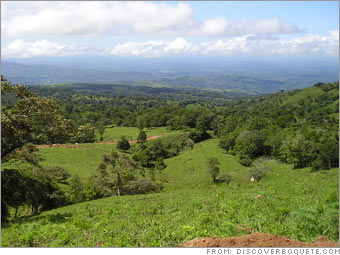
Panama City is economically dynamic, a banking and shipping center with a diverse population where English is commonly spoken. But the place of choice for many Americans is Boquete, high up in the volcanic mountains. The climate there is ideal with warm days and gentle nights. There are masses of flowers everywhere, one reason it's known as the land of eternal spring.

Full text in http://money.cnn.com/2007/01/18/real_estate/hottest_foreign_second_home_markets/index.htm

Sunday, September 02, 2007

Authentication of Canada documents for use in Panama

Canada has not signed the 1961 treaty on Apostille, which means that documents issued by Canada authorities (such as birth certificates and police records required for residence visa applications) and contracts signed in front of and notarized by Canada notary, must be authenticated by a Panama consul in Canada. The procedure involves to:

a) have the document notarized in Canada by a Notary Public;

b) have the Notary's signature authenticated by the Lieutenant-Governor of the province in which the Notary is commissioned. Requests for authentication are usually chanelled through the Deputy Provincial Secretary of the province (other province auhtorities are listed here). In Quebec, the Secretary of the Board of Notaries / Chambre de Notaires http://www.cdnq.org/ authenticates these documents. In Ontario, the Official Documents Services (ODS) of the Ministry of Government Services http://www.gov.on.ca/MGS/en/OffDoc/STEL02_046905.html Federal documents must be submitted to the Authentication and Service of Documents Section (JLAC), Foreign Affairs and International Trade Canada in Ottawa http://www.dfait-maeci.gc.ca/common/authentication_documents-en.asp / http://www.international.gc.ca/common/authentication_documents-fr.asp;


c) have this signature authenticated by the Panama consular services in Canada (call first to determine the fees and if it is possible to mail them the document with prepaid return postage);

d) arrange for your Panama attorney to have the Panama consul's signature authenticated in Panama by the Panama Ministry of External Affairs.

Please note that only original documents (or certified copies of these), bearing the signature of the competent signing authority may be authenticated.

These are the addresses of Panama Consuls (always subject to changes) listed in the e-government site Panamatramita are:
Embajadora y Enc. Asuntos c.
Nombre: Romy Vásquez
Teléfonos: +(1) 613-236-7177
Tels. Fax: 613-236-5775
Dirección: 130 Albert Street, Suite 300, KIP 5G4 Otawa, Ontario, Canadá
e-mail: pancanem[at]travel.net.com
romyvasquez[at]gmail.com

Vice Cónsul Honoraria
Nombre: Melva Méndez Aizpurua
Teléfonos: +(1) 514-874-1929
Tels. fax: 541-874-1947
Dirección: 1425 Rene Levesque O, Bureau 504, H 3GIT 7 Montreal, (Que) Quebec, Canadá
e-mail: cgpm[at]generation.net

Cónsul General
Nombre: Gilberto Boyd
Teléfonos: +(1) 416-651-2350
Tels. fax: 416-651-3141
Dirección: 881 St. Clair Ave. West 2 Floor Ontario, M6C-IC4 Toronto, Canadá
e-mail: conpantor[at]look.ca

Cónsul General
Nombre: Eduardo Arango
Teléfonos: +(1) 604-682-6128; 604-682-7128
Tels. fax: 604-682-0528
Dirección: 1112 West Pender St. Suite 407, V6E 2S1 Vancouver, B.C. Canadá
e-mail: invo[at]panaconvan.com

IPAT reply on residential tourism

We thank IPAT for their reply to our July 29, 2007 post on residential tourism. Unlike newspapers in Panama, we encourage free discussion of ideas which is why http://mypanamalawyer.blogspot.com/ has Comment icons for direct posting by IPAT and anybody else. We have eliminated the email addresses to avoid spambots:


------ Forwarded Message
From: Ruben Blades
Date: Mon, 30 Jul 2007 16:05:08 -0500
To: Carl-Fredrik Nordstrom
Subject: Residential tourism


Send this to the person responsible for the
publication:

a) From what I read you do not dispute there is a
difference between tourist and resident; no part of
your blog argues against my basic assertion
b) your defense of the term seems to be based on the
fact that ,
"since other countries use it it must be right".
c) I suggest you read the "Louvre Museum-turned into
condos" example I placed on our Internet. It
graphically explains the differences, both economical
and existencial, between residence and tourism;
d) As a lawyer you obviously make money representing
clients interested in residential purchases and an
intermediary for all the legal consequences of
residential requests involving navegating the
burocratic oceans in any country of the world. You are
not a hotel owner, nor do you represent cab drivers,
restaurants, hotel personnel, guides,etc. My feeling
is you'd rather have residents than tourists since the
former represent your "bread and butter". That is not
my position.
I have no problem with people coming to live in
Panama. I welcome the possibility. What I do not
welcome is the notion that tourism and residence are
the same thing, nor that they should be considered as
a whole. They are different activities and should be
regulated differently. IPAT does not regulate
immigration, nor does it regulate taxes for instance.
You should know that and probably do. But your
arguments seems to be directed toward justifying the
notion of "residential tourism". It is absurd to mix
the two. I guess that's the lawyer in me.

Ruben Blades


Carl-Fredrik Nordström
Sub-Gerente General / Deputy General Manager
Instituto Panameño de Turismo -IPAT
Avenida Samuel Lewis y Calle Gerardo Ortega
Edificio Central, Nivel 100
( Teléfono: (507) 526-7110, (507) 526-7000
) Fax: (507) 526-7121
8 www.ipat.gob.pa


------ End of Forwarded Message

Wednesday, August 29, 2007

Panama tourism and investment meetings

Like every small country, who you know can make a difference in how easy is your entry into the Panamanian market. These 3 events provide opportunities to network with Panamanians and foreigners active in the foreign and private sectors.


August 23, 2007
AmCham Events, Sponsorships and Notes
Telephone +507-301-3881; Fax +507-301-3882
Ocean Business Plaza, 17th Floor, Avenida Aquilino de la Guardia

AmCham’s Seventh Annual Tourism Forum will be held on September 19 at the InterContinental Playa Bonita Resort & Spa. This year we are inviting the renowned expert on global business for Europe, Asia and the Middle East, Dr. Rohit Talwar, to discuss trends in world tourism business. In addition, there will be five speakers from Panama and the United States, including Panama’s Minister of tourism Rubén Blades, who will participate in the round table discussion with Dr. Talwar at the end of their presentations. We will have two levels of sponsorship this year: The Gold Sponsorship will entitle the company to three tickets to the forum, its logo on all advertising, its banner in the event room and a table at the entrance to market its products; The Platinum Sponsorship will include 15 tickets to a private dinner with Dr. Talwar on the evening of the 19th and ten tickets to the event plus the logo, advertising and banner. The cost of tickets for the event is $50.00 per person. Payment must be made at the Chamber by September 17. Space is limited. For reservations, call Aileen at 301-3881 or e‑mail amcham @ panamcham.com.

Panama Week 2007 Conference. USPA will hold its annual Panama Week Conference in Washington DC on October 18-19 at the Westin Embassy Row Hotel. The conference will include Forums on Trade & Investment and Transportation & the Expansion of the Panama Canal, the traditional Gala “Friendship Dinner” at the Organization of American States, a Power Breakfast on the Trade Promotion Agreement, meetings at the U.S. Department of Commerce and lunch at the Embassy of Panama hosted by Panama’s Ambassador to Washington, H.E. Federico Humbert.
A rooming block has been reserved at the Westin Embassy Row hotel for participants at a special rate of $309 plus tax. Make reservations through USPA.


FIABCI’s 2007 Congress of the Americas will take place in Panama City 31 October – 2nd November. FIABCI is an international real estate federation of 100 real estate associations and represented by chapters in 48 countries according to the FIABCI website, including FIABCI-Panama.
The Congress will be held at the Sheraton Panama Hotel and Convention Centre. Early registration fees for members will be US$ 300. Early registration fees for Young Members will be US$ 150.
Additional information is available from USPA.

Monday, August 27, 2007

Town hall meetings on new skyscrapers are open to property owners


Following the succesful lobbying by neighbors of El Cangrejo against skyscrapers, the Ministry of Housing (MIVI) is having a number of town hall meetings (cabildos) in order to have the opinions of residents for and against additional construction.
Neighbors rejected 3 out 4 zoning changes proposed in Bella Vista, where older homes in 2-lane streets are being demolished every week to make way for skyscrapers and restaurants with insufficient parking.
The calendar of meetings scheduled by MIVI are:
.27 AUGUST: San Francisco (includes Paitilla and Boca la Caja).
.28 AUGUST: Juan Díaz (includes everything at each side of the Southern Corridor starting from Costa del Este).
.31 AUGUST: Parque Lefevre (includes Panama Viejo).
.3 SEPTEMBER: Pedregal.
.4 SEPTEMBER: Las Cumbres (includes Cerro Azul).
.5 SEPTEMBER: 2nd Bella Vista meeting.
.6 SEPTEMBER: 24 de Diciembre (includes parts of Tocumen).
Foreigners cannot vote in Panama elections, but as property owners they can participate in these town hall meetings.

Saturday, August 11, 2007

Lawsuits against developers increase

Our friends at the Consumer Authority inform that 183 complaints have been filed against several developers for defects in apartments. The champs in complaints are:
35 complaints from Urband (sic) Land Corp. (Grupo Los Pueblos)
16 Procasa
8 Sucasa
6 Centenario Don Juan
6 Inmobiliaria Royal Hill, S.A.
3 Construtec, Inc.
5 Green Bay Plaza, S.A.

BM Real Estate, Inc., Inmobiliaria Green Bay Plaza and Inversiones Ventaviv were wise enough to settle with their complainants.

More in the Spanish press release
http://www.autoridaddelconsumidor.gob.pa/pdf/NP_QuejascontrainmobiliariassedisparanenlaAutoridad_10agosto07MA.pdf

In the meantime, the National Council of Housing Promoters (CONVIVIENDA) claim that they will submit to the Authority a model promise agreement meant to be free of abusive clauses. We went to their webpage and asked for a copy of the agreement. Maybe the agreement will take the CON out of CONVIVIENDA...

Wednesday, August 08, 2007

Bar Association continues prosecution of malpractice cases


Several attorneys were served notice of several complaints filed by disgruntled clients before the Honor Tribunal of the Bar Association. These attorneys had avoided service so they were served through a public notice posted at the association offices.

Although the Honor Tribunal finds several attorneys guilty of ethics violations and recommends their disbarment or suspension by the Supreme Court, the Court is reluctant to render a prompt decision.

Sunday, July 29, 2007

Minister Blades corrects "residential tourism" aberration

Tourism Minister Ruben Blades explains in a letter published in the July 8 La Prensa (with an English translation in the IPAT site), how he has tried to correct the aberration which the term "residential tourism" has become.

The Former Papa Egoro Presidential candidate blames daily La Prensa for being an example of how twisted ("enredados") some people still are when trying to report about tourism, and about second residence; the mistake is made of affirming the "new tourist visa affects real estate sector". His response is addressed at July 5 articles by La Prensa journalist Raul Bernal and PrimaPanama general manager Paul McBride.

He points out that the insistence in confusing both circumstances, that of tourism and that of who seeks a temporary or permanent residence in Panama, is responsible for all the confusions and apparent contradictions which circulate on the Internet.

This blogger is concerned that the Minister will have an uphill battle in correcting the aberration which residential tourism. The term has 89, 400 hits in Google, quoted by sites such as:

Wikipedia: the economy of the region is turning towards "residential tourism" in which many people from northern European countries have a second home in sunny Murcia.
Government of Montserrat National Environmental Action Plan (NEAP): Much good land has been transferred for residential tourism and other development but there remains an ample supply for agriculture.
Egyptian officials: The minister added that obstacles surrounding visas, property ownership and even public transportation have all been eliminated, fuelling increased interest in residential tourism offerings, new luxury resorts and recently introduced services.
World Wildlife Fund: Second-house tourism has the greatest growth potential in the tourist industry of the Spanish southeast: of every 100 houses built in Alicante, 60 are for the second house market. Foreign tourists (80% from Germany and UK) own 240,000 houses in the province of Alicante, which is the province in Spain with the highest numbers of residents coming from other EU countries. This residential tourism, is normally characterised by high acquisition power.
Governor General of Antigua & Barbuda: My government also recognises that a huge opportunity exists for residential tourism. Both wealthy persons and retired persons in North America and Europe are seeking residences in tropical countries to escape harsh winters. In this connection, one hundred acres of land will be identified for development by major developers with the capacity to build and market such homes. Similar developments have taken place in Barbados, Jamaica and The Bahamas and they have resulted in large scale employment for locals in the service industry, expanded sales to the business community for the supply of goods, and increased and sustainable revenue to the government from property taxes. My government expects to launch this development project within the next few months bringing over thirty million dollars in revenue after all the lands are sold and earning almost four million a year in property taxes once the project is completed.
My government's objective for land-based tourism is to position Antigua and Barbuda so that within the next few years it emerges as one of the principal tourism destinations in the world. It recognises that, to do so, we need a trained and competent work force in all aspects of the hospitality industry including fluency in languages, expertise in the highest levels of culinary art, catering and management. .... The Investment Promotion Agency will work closely with our missions abroad to promote Antigua and Barbuda as a centre for foreign investment in tourism, residential tourism, financial services, e-commerce including internet gaming, and niche agriculture production.
Dimitris Avramopoulos, Tourism Development Minister, Greece: he and other senior officials or businessmen in the tourism industry believe that a largely untapped potential for development exists in integrated resort complexes, combining health tourism (thalassotherapy, spas, beauty parlours, rehabilitation facilities), conference centres, marinas, residential tourism (real estate sales or leases, including group retirement schemes), casinos and golf courses.
Invest in Golf: It is not rocket science, which is why other counties are starting to develop their residential tourism markets. Croatia, Turkey, Egypt and Bulgaria are all trying to develop their residential markets and attract foreign investors.
ProExport Colombia: FID and Residential Tourism: Seeking Retirees
Amazon: Books
III Conference on Residential Tourism: 1 whole day of panels and speakers about this aberration.
Cajamar Institute: Study on possibilities of residential tourism in Malaga
Tax Studies Institute: Study on tax barriers to residential tourism
Malaga on the web: Study on residential tourism
University of Madrid: Online course on residential tourism in Andalucia
Promotur: Powerpoint presentations and news from the Andalucia Association of Residential Tourism


Obviously, governments in Greece, Antigua, Colombia and other countries do believe in the benefits of residential tourism. We truly believe that taxpayer moneys would be better spent in immigration control technologies which do not require prospective buyers of US$250K homes to spend 4 hours every 30 days sitting at the overcrowded Avenida Cuba facilities of the Immigration department, if these controls are truly necessary to deter illegal immigration.

Friday, July 27, 2007

NEW COMMUNITY: Logistics hub in the making

Tuesday Jul 24 2007 07:10

By Adam Thomson

Think of Panama City and one of the first images is the crescent-shaped bay, defined on one cusp by the growing sky-rise residential area of Punta Paitilla and the picturesque old centre of 19th century pastel-shaded waterfront buildings on the other.

But if London and Regional, a UK-based construction company, gets its way, the city could soon outgrow its traditional boundaries to occupy a huge area of land just across the Bridge of the Americas spanning the Panama Canal: Howard, the former US Air Force base.

This month, the company, together with Jaime Gilinski, the Colombian banker and entrepreneur, signed an agreement with the Panamanian government to build what it hopes will become a new business and residential hub within just a few miles of the existing capital.

The company has three months to present its master plan for the 1,400ha site and, as yet, few details are known. But London and Regional has pledged a minimum investment of $405m during the first eight years of the 40-year concession. A further $300m will follow during the remaining years.

This month, after paying the government a one-off fee of $20m to seal the contract, Ian Livingstone, who heads the company said: "We hope to exceed the spending limits established with the government quite dramatically."

Indeed, Mr Livingstone and Mr Gilinski believe the value of the finished project could top $10bn, equivalent to more than half Panama's gross domestic product. The idea, they say, is to construct a large industrial park, a media village, a downtown area with plaza, restaurants and shops, a showcase building to mark the nearby entrance of the canal and a swathe of residential buildings – for both the wealthy and low-income segments of the population.

"Our intention is to create a community, and that won't work unless you have a representative mix of society and a critical mass to achieve a stable and permanent population," says Mr Livingstone.

That is a far cry from how the area looks today. Large white houses adorned with red-tiled roofs and built up on stilts line grassy streets named to make the US soldiers to feel right at home.

On one side of the area lie a 3.2km runway and four huge hangars which served as centres of aviation maintenance and storage up to 1999 when the US packed its bags and went home.

Economists and town planners say that one of the measures of success will be the amount of interest and the number of firm offers from companies looking to use Panama as its centre of regional operations.

Mr Livingstone says he has already initiated detailed talks with many multinationals. "We have had between 20 and 30 serious approaches from companies whose names everyone is very familiar with," he says.

If they end up moving to the site, it is likely to be for two main reasons. The first is Panama's increasing emergence as a logistics hub for the wider region. Since the government of Martín Torrijos came to power in 2004, it has set in motion a plan to encourage shipping and transport companies to use its strategic position as a centre of distribution.

The second could be a series of tax benefits. Officials say companies involved in industries such as aviation and related activities, and information technology, will not have to pay any taxes or import and export duties.

"What we want to generate is investment and employment," says one official, who estimates that the project could create between 20,000 and 25,000 new jobs.

Full text and subscription at http://us.ft.com/ftgateway/superpage.ft?news_id=fto072420070720116045

PROPERTY: Ideal spot for the second home

Tuesday Jul 24 2007 07:10

Charles and Sharon Erwin, two semi-retired residents of Mobile, Alabama, have spent much of the past few years travelling the world in search of a second property to which they can escape during the colder months. Between leisurely holiday trips and more active searching, the couple have visited more than 40 countries so far. But tonight, they are sitting in a cosy family restaurant in the hills of Panama and they sense that their quest for the ideal spot has come to an end.

"Have you ever met somebody you just liked immediately?" asks Mrs Erwin, an elegantly dressed woman with fine features and an intoxicating southern drawl. "Well, the Panamanian people are mostly like that."

Now 71 and 62, respectively, Mr and Mrs Erwin are part of an invasion of foreigners who are snapping up Panamanian real estate in every shape, size and location imaginable as part of what has turned into the most vigorous property boom in decades. "It is as if they were rediscovering America again," says Lourdes Fabrega, the restaurant owner who says an increasing number of her customers are foreigners on a hunt for property.

In Panama City, the capital, real estate developers have responded to the foreign interest as well as to strong local demand by building tower blocks of luxury flats on just about any plot of land they can get their hands on. Last year, construction permits surpassed $1bn, growing more than 10 per cent compared with the previous year. Iván Carlucci, president of Acobir, the national association of estate agents, says Panama is the target for 175 high-rise apartment blocks, which are either under construction or in the pipeline.

The surge has been so great that the government has had to establish special courses to cater for the growing demand for plumbers, electricians, carpenters and other construction-related skills. Diomedes Concepción, who heads the programme, claims that about 200,000 Panamanians will receive such training this year alone.

The fundamental reasons for the interest in Panama seem clear enough. Investors, particularly foreigners, are reassured by the fully-dollarised economy, the country's stable government, rapidly expanding economy, proximity to the US, hot climate and good healthcare provision. In addition, prices are relatively competitive in relation to those of neighbouring Costa Rica, which has been attracting foreign buyers for years. Juan Francisco Pardini, president of Business Panama Group, a one-stop investment shop, says property prices about five years ago were between eight and 10 times cheaper than those of Costa Rica: today, they are just three times cheaper.

Mr Pardini also points out that buying property in Panama is straightforward in terms of paperwork and bureaucracy. Typically, he says, charges related to purchasing real estate regardless of value are roughly $3,000 plus an optional fee of 1 per cent of the property's value for title insurance.

Inevitably, however, all the interest has produced inflation. The cost of steel went up 40 per cent at one point last year. Meanwhile, the availability of cement at the start of this year became critical. In February, Ms Fabrega, the restaurant owner, could not ensure a reliable supply for the small house she was building on her land. "If I wanted 10 sacks I could only get five," she recalls. "It felt as if there was no cement in the entire country."

Property prices have also risen. Mr Carlucci says that land prices have increased on average 100 per cent in the past two years alone.

Such rises have spawned talk of a bubble forming in the real estate market. The feeling has been reinforced by growing evidence that some investors – from the US but also, it appears, from Venezuela and neighbouring Colombia – are buying pre-sale condominiums in bulk to "flip" or sell them on as little as six months later.

On top of that, three highly publicised high-rise projects in Panama City have run into problems – though apparently for different reasons – and have either been cancelled or significantly altered.

All this has led many experts to express caution about whether the market can continue to expand at today's rates. As Guillermo Chapman, an economist and a former finance minister, says: "You should look at the housing part of Panama's growth with a critical eye."

Not everyone agrees, however. Mr Carlucci of the real estate association, rejects the idea of a bubble, arguing that the sector is both healthy and sustainable thanks to Panama's strong economy and real demand both from locals and foreigners.

Héctor Alexander, the finance minister, agrees. "The few projects that have run into problems are the exception to the rule," he says. "The construction sector is sustainable."

True or not, it is unlikely to make much of a difference for families such as the Erwins. Even with the price increases they still think it is cheap. And that, as Mr Erwin admits, is important to a man of his background. "I was brought up kind of frugal, and I just hate to spend money," he says with a smile.

Full text and subscription at http://us.ft.com/ftgateway/superpage.ft?news_id=fto072420070720116048

THE ECONOMY: Excessive wealth fails to filter down to the poor

Tuesday Jul 24 2007 07:10

It is early evening on a Wednesday night but Manolo Caracol is buzzing just the same. A group of more than 20 well-dressed Panamanians fills one side of the spacious, ethno-chic restaurant, and the sangria at their table has been flowing for a while. To the left, against a backdrop of primitive oil paintings and oversized buckets brimming with tropical fruit, a young woman cooks furiously while waiters skip between the tables in an attempt to keep up with demand.

Not so long ago, you could turn up unannounced at this cool, Colombian-owned restaurant in the best part of Panama's historic centre and be confident of getting a table. Doing that today might lead to disappointment: Panama's economy is expanding at the fastest rate in almost a generation, and business is booming virtually everywhere you look. "We're experiencing growth across the board, not just in one particular sector," says Héctor Alexander, Panama's finance minister.

During the first quarter of this year, the country's fully-dollarised economy expanded at an annual rate of 9.4 per cent after growing 8.1 per cent during 2006, and both government and private-sector estimates suggest that the end-of-year figure will surpass 10 per cent.

Exports grew 15.1 per cent last year in nominal terms, and strong growth in government revenue – during the first quarter of this year it was expanding at more than 19 per cent year-on-year – helped notch up a non-financial public sector surplus equivalent to 1 per cent of gross domestic product. In the financial sector, credit is growing apace and levels of capital and reserves are building up fast.

Crucially for Panama's newfound dynamism, prime lending rates are below 9 per cent, the lowest in years.

One clear motor driving growth is the robust world economy – in spite of the US deceleration – and in particular, the heady expansion of the global shipping trade. That has boosted activity for the canal by between 5 and 6 per cent in recent years. It has also spawned the growth of related sectors such as tourism and rapidly expanding re-export trade. According to Samuel Lewis, the vice-president, the movement of shipping containers this year through Panama will reach 3m units, up from just 700,000 at the start of the millennium. He expects that figure to increase to 7m by 2009.

Guillermo Chapman, an economist and a former finance minister, describes the second engine of growth as a sort of "the world has discovered Panama" phenomenon. The country's geographical location, stable political system, the dollarised economy, still relatively low levels of inflation – the rate has fallen slightly since reaching a two-decade high of 3.9 per cent in 2005 largely as a result of high oil prices – and benign interest rates have spawned a wave of foreign direct investment. Mr Chapman says FDI this year is set to hit $2.5bn up about 20 per cent on last year.

The most obvious sign of this is in construction. Look out from the 19th century waterfront buildings of the capital's historic quarter across the bay and the rate at which the skyline is changing suddenly becomes apparent.

Another is the sparkling sports cars and shining SUVs that fill Panama City's already crowded streets. Drive down Balboa Avenue, the road that links old and new Panama City, and you will see the latest Lexuses and Lamborghinis vying for space with fat-tyred Fords and Toyotas.

The trouble is that this ostentatious wealth is not quite everywhere. Look beyond the investment figures, glass skyscrapers and the fancy restaurants and poverty more reminiscent of the seamier side of Haiti comes into view.

In Panama City's old neighbourhood, wizened men eke out a living selling loose cigarettes from roadside stands improvised from cardboard boxes and planks of wood. Families live in dingy, airless rooms that, as often as not, serve as kitchen, sitting room and bedroom all in one. Go out into Panama's lush tropical countryside and it is a similar – and sometimes even more miserable – story.

"The gap between rich and poor here just gets wider," argues Miguel Antonio Bernal, a well-known lawyer and critic of the government. "Sure, there's growth but none of it filters down to the poor." Mr Bernal insists, for example, that unemployment is running at between 20 and 23 per cent of the country's economically active population.

The administration of President Martín Torrijos dismisses such assertions, insisting that the percentage of jobless is more like 6 per cent, a historic low. But it does recognise that many Panamanians continue to live in extreme poverty. The government also says it is working overtime to try to solve the problem. Mr Lewis insists that the Opportunities Network, providing a direct subsidy of $35 a month to families that can show that their children attend school regularly and turn up to doctors' appointments, is making a significant difference for 38,000 of the 78,000 families it claims live in extreme poverty. By 2009, when the administration's term ends, Mr Lewis claims the remaining families will be receiving similar help.

Two further shadows – the fear of a bubble in the vigorous property market and a slowdown in the global economy – could also loom in the coming months and years. Mr Chapman believes that a continuing softening of the US housing market would be likely to produce less demand from US baby boomers who have been snapping up retirement homes and second properties in Panama.

Meanwhile, Mr Chapman points out that a change of fortunes in the global economy is simply a question of time – though exactly when that will happen is clearly guesswork. So what does all that mean for Panama in the medium term?

With no clear sign of an impending slump in world growth and with China's emergence as an economic superpower continuing to underpin shipping activity – China is now the second most important client of the canal after the US – many private economists believe that the country can maintain growth rates of between 6 and 7 per cent. It is a rate that almost any government in the world would be more than pleased with.

Full text and subscription at http://us.ft.com/ftgateway/superpage.ft?news_id=fto072420070720116044.